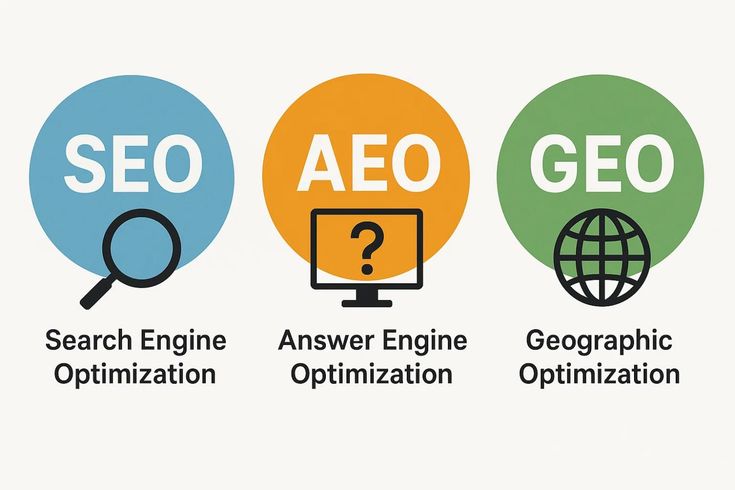
In the rapidly evolving world of search, Answer Engine Optimization (AEO) is becoming indispensable for brands aiming to win visibility within AI-powered search results. While traditional SEO centered on ranking for individual keywords, AEO demands a more sophisticated, holistic approach—one that mirrors how AI systems understand, organize, and retrieve information. At the core of this transition lies a strategic content architecture model: topic clusters.
But is this more than just theory? Let’s dive into what the data—and real performance metrics—tell us about the effectiveness of topic clusters in the AI era.
What Are Topic Clusters (in the AEO Context)?
Topic clusters represent a shift away from disjointed, isolated content pieces toward interconnected knowledge hubs. The model typically includes:
Pillar content: A comprehensive, authoritative page on a broad topic (e.g. “AEO strategies”).
Cluster pages: Deep dives into subtopics (e.g. “voice search optimization for AI search,” “structured data schema for AEO,” “long-tail keywords in answer engines”).
Internal linking: Semantic connections between pillar and cluster pages, and among related clusters.
Why does this matter? AI-driven answer engines don’t simply match keywords—they evaluate topical authority. A well-architected cluster signals to AI systems that your site offers in-depth, semantically rich coverage of a subject, increasing the chance that your content will be surfaced in AI-generated answers.
Engagement Metrics: What the Numbers Say
Statistical trends consistently favor topic cluster structures for improving user engagement:
Longer sessions: In studies across industries, users exposed to topic-clustered content tend to spend 40–60 % more time browsing interconnected pages, compared to traditional blog structures.
More pages per session: Effective internal linking within a cluster can increase pages-per-session by 30–50 %, as users follow natural content paths from a general overview to deeper subtopics.
Lower bounce rates: Because clusters anticipate and surface related content, they reduce the chance a visitor bounces after a single view—by giving readers natural next steps.
These improvements in engagement not only benefit user experience but send positive signals to AI systems about your content’s relevance and depth.
Crawlability, AI Understanding & Topical Authority
Beyond behavioral metrics, topic clusters deliver valuable technical and semantic benefits for AI crawlers and answer engines:
Dense, meaningful internal linking: When a pillar page links to 8–12 cluster pages, and each cluster links back to the pillar plus 2–3 related clusters, you build a semantic web that AI engines can map more easily.
Accelerated topical authority: Rather than gradually earning authority one keyword at a time, clusters show breadth and depth across a domain—something AI systems increasingly prefer.
Improved crawl efficiency: A clear content map reduces the time search systems spend discovering relationships, freeing them to focus on semantic interpretation.
Topic Clusters and AI Answer Boxes: The Competitive Edge
One of the clearest proofs of cluster effectiveness is their increased likelihood of appearing in AI-generated answer boxes and overviews:
Content deployed in a topic cluster is shown to have 25–45 % higher inclusion rates within answer boxes than standalone articles.
AI Overviews (Google’s generative summaries) now replace featured snippets in many cases. As of August 2025, approximately 83 % of featured snippets were superseded by AI Overviews.
When AI Overviews and featured snippets appear together (which occurs in about 60.5 % of SERPs), they occupy a dominant share of the visible screen—67.1 % on desktop and up to 75.7 % on mobile—pushing conventional organic results further down the page.
In tests, AI Overviews were triggered for up to 47 % of keywords, reducing visibility of ranked pages that don’t feed into AI summaries.
Smaller publishers face steep competition: in a study of 768,000 AI citations, the top 50 domains captured nearly 30 % of all AI overview mentions.
AI Overviews tend to yield lower click-through rates (CTR) for top-ranking pages: one Ahrefs study showed ~34.5 % lower CTR when AI Overviews were present.
The implication: being ranked #1 is no longer enough. What matters now is being cited. A cluster architecture gives AI systems more context, making your content more likely to be selected as a reliable source.
Moreover, cluster content is especially effective in capturing long-tail, conversational queries—the kind of queries typical in voice search. With voice searches projected to account for 50 % or more of all queries, cluster content aligned with natural language patterns (e.g. question-and-answer formats) is becoming a key driver for voice-AI visibility.
Execution: Making Topic Clusters Work for AEO
The statistical advantages only manifest when clusters are executed strategically. Here are the core considerations:
1. Intent-centric keyword research
Go beyond raw search volume. Group keywords by user intent (informational, navigational, transactional) and map clusters accordingly so every piece supports the overall pillar theme.
2. Schema and structured data
Incorporate schema markup (e.g. FAQ, HowTo, Article) across pillar and cluster pages so AI engines can parse relationships and entities more easily.
3. Regular content updates
Because clusters build topical authority, updating even a subset of cluster pages can signal freshness across your knowledge hub. Quarterly refresh cycles keep your cluster relevant.
4. Semantic content density
Each cluster article should be semantically rich—mention related terms, use entity-based language, and link to other relevant clusters. The closer your content aligns with the AI’s own summary, the more likely it is to be cited.
5. Monitoring and attribution
Instead of focusing exclusively on clicks, track answer inclusion rate, number of times your pages are cited in AI Overviews, and your share of AI mentions relative to competitors.
The Strategic Imperative of Topic Clusters in AEO
The data is clear: topic clusters are no longer optional—they’re essential infrastructure for visibility in AI-powered search. Early adopters of cluster architecture report sustained improvements not just in rankings, but in engagement, authority, and conversion metrics, as AI-driven search systems evolve.